Returns are a margin signal, not just an ops ticket
The return request is usually the last visible step. By the time it appears, the shopper has already compared the product to an expectation your store helped create.
For Shopify merchants, that makes returns more than a warehouse or support workflow. They are a delayed signal about product clarity, promise accuracy, packaging, delivery expectations, and first-use confidence.
If you want to reduce Shopify returns, the useful question is not only “why did this customer return?” It is:
Where did the customer form the wrong expectation?
A return reason is too late unless it points upstream
Standard return reason codes are useful for processing, but they are often too broad for improvement.
“Not as expected” can mean:
- the product photos hid scale or texture
- the specs were technically present but hard to compare
- the packaging made the item feel lower quality
- the delivery promise set the wrong timing expectation
- the customer bought for a use case the product does not actually serve
Those are not the same problem. They belong to different owners.
Instead of treating every return as a support event, treat each one as evidence that should point to one upstream store asset: product page, image sequence, variant naming, shipping copy, packaging, post-purchase education, or support macro.
The returns feedback loop
Use a simple weekly loop. It is intentionally small enough for a founder, operator, or CX lead to run without a research team.

1. Capture the customer’s plain-language reason
During return initiation, ask one open question:
“What would have helped you avoid this return?”
Keep the standard dropdown if you need it for operations, but do not stop there. The open answer is where customers explain the missing expectation.
2. Tag the issue by store asset
Do not tag only by sentiment. Tag by the thing you can change.
Useful buckets:
- PDP copy or specs
- product photos or video
- variant naming
- shipping and delivery promise
- packaging or first impression
- first-use instructions
- audience or use-case fit
This makes the feedback easier to assign.
3. Compare return reasons against pre-purchase hesitation
This is where many stores find the pattern. The same uncertainty may appear twice: once before purchase, then again in the return.
For example, shoppers may ask “Will this work with my setup?” before buying, and later return because compatibility was unclear. That is not a returns-policy issue. It is a product-detail issue.
4. Fix one asset at a time
Trying to solve every return reason at once usually leads to vague work. Pick one high-frequency, high-exposure issue and change one asset:
- rewrite a confusing PDP section
- add a scale photo or comparison image
- clarify variant names
- move delivery expectations earlier
- add a short first-use guide after purchase
Then watch whether the next set of return comments changes.
Where to place feedback before the return happens
The return request tells you what went wrong. Earlier feedback tells you where confidence was weak.

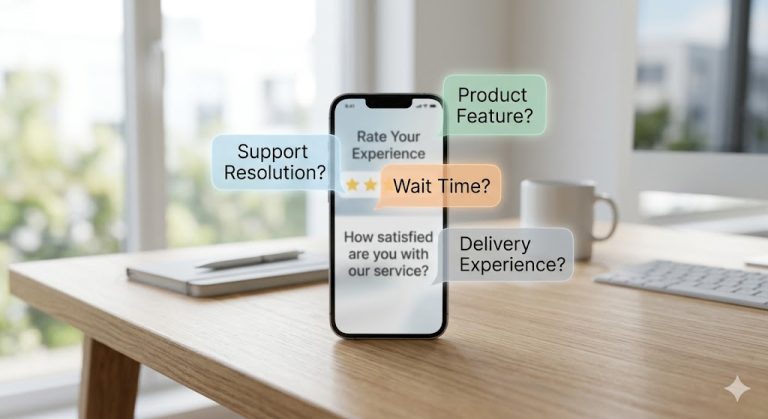
Use different moments for different signals:
Product page hesitation
Ask what information is still missing before the shopper chooses. This catches expectation risk before the order.
Thank-you page confidence
Ask how confident the buyer feels that the product matches what they need. Low confidence on a specific SKU is an early warning.
Post-delivery pulse
Ask whether the product matched what the customer expected from the product page. This links the merchandising promise to real use.
Return initiation
Ask what would have prevented the return. This is the clearest improvement prompt, but it arrives late.
Together, these moments show whether the issue is pre-purchase clarity, post-purchase education, delivery expectation, or product fit.
Review returns by product exposure, not just volume
The highest number of returns is not always the first thing to fix. A top-selling product will naturally produce more returns than a niche item.

Look for combinations:
Repeated reason + meaningful sales volume
Fix first. This is likely costing margin and trust.
Repeated reason + low sales volume
Investigate before rewriting the store. It may be a product-positioning issue, not a sitewide problem.
One-off complaint + high emotional intensity
Send to support, but do not overfit the product page unless it repeats.
Return reason also appears in pre-purchase hesitation
Treat as a strong signal. Customers warned you before the return happened.
This keeps the review practical and prevents one dramatic comment from steering the roadmap.
What changes when the loop works
A good returns feedback loop does not eliminate returns completely. Some returns are normal. The goal is to reduce avoidable returns caused by unclear expectations.
You should start seeing:
- fewer repeated “not as expected” comments
- more specific customer language
- clearer owner assignments for product-page fixes
- support macros that feed back into merchandising
- better confidence before the buyer commits
The important shift is cultural: returns stop being only a cost to process and become a source of store improvement.
Make returns part of merchandising work
The best return reduction work happens before the label is printed. It happens when the product page sets the right expectation, the post-purchase flow reinforces the right use case, and the support team feeds repeated friction back into store assets.
You do not need a giant CX stack to do this well. You need better questions, placed at the right touchpoints, and a weekly habit of turning signals into specific store updates. Insightto is built around that loop for Shopify merchants, and you can review the app on the Shopify App Store.